
About Al-Juthoor
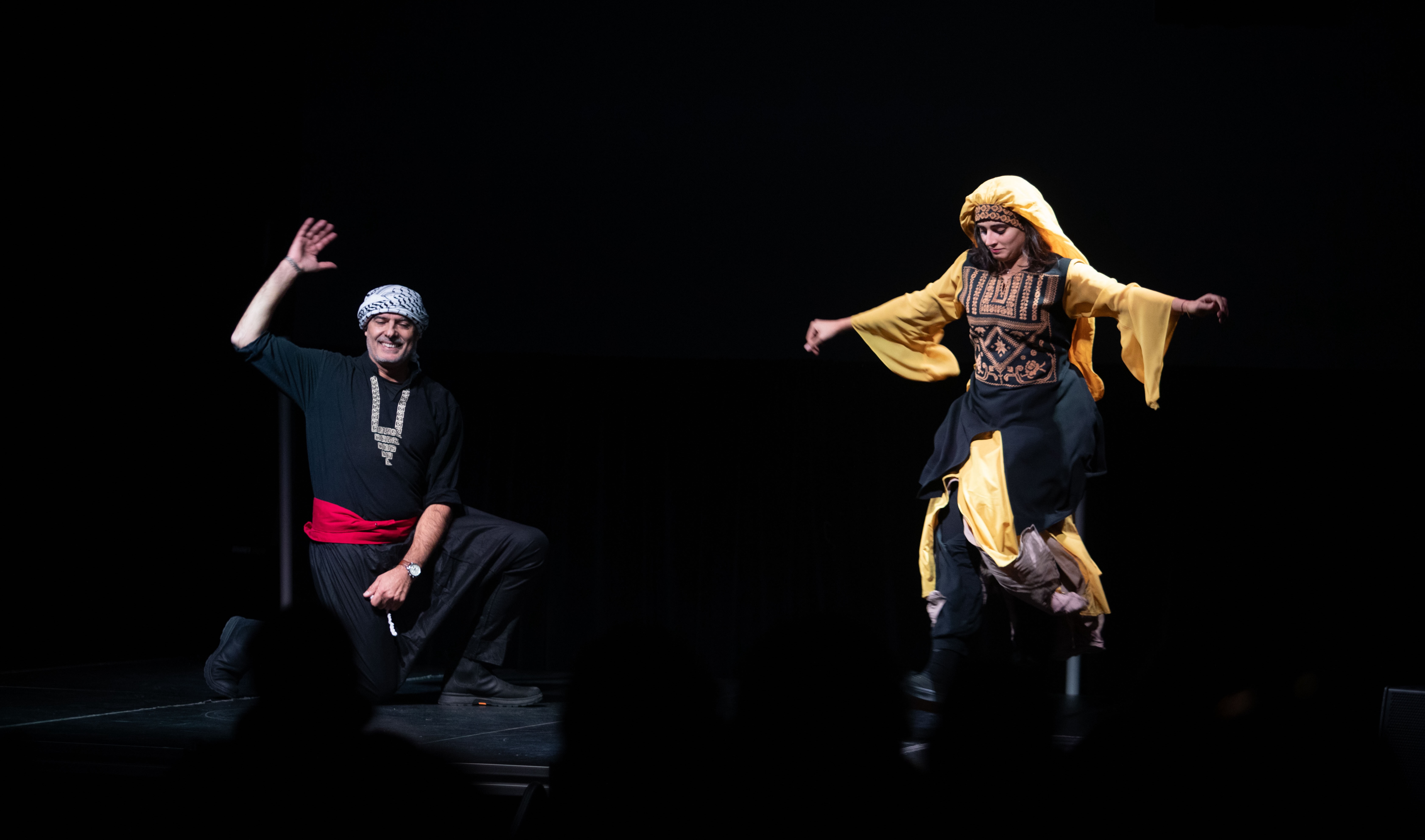
Al-Juthoor is a dabke troupe based in the Bay Area in California, and our name means "Roots" in Arabic. Through dabke, a dance form practiced across the Arab Levant (Bilad al-Sham), we assert our deep roots in the land and to the people throughout the Arab world. We aim to empower our community and raise awareness of Arab and Palestinian struggle, culture, and art.
We prioritize dancing with our community in schools, cultural gatherings, and solidarity events. Al-Juthoor also has performed in concert halls, graduation ceremonies, public libraries, Arab American History Month assemblies, and rallies. Our dancers have studied with Ramallah-based dance troupe El Funoun and teach dabke workshops to Bay Area youth.
Learn more about our work on our events page. If you're interested in booking us for your event, contact us.
Our Goals
-
Empower our community and youth to take pride in our heritage.
-
Express through dance our values of dignity and liberation.
-
Build relations with people from all backgrounds who use art as a tool for justice and cultural resistance.
Read more in our Mission Statement.
Palestinian Dabke
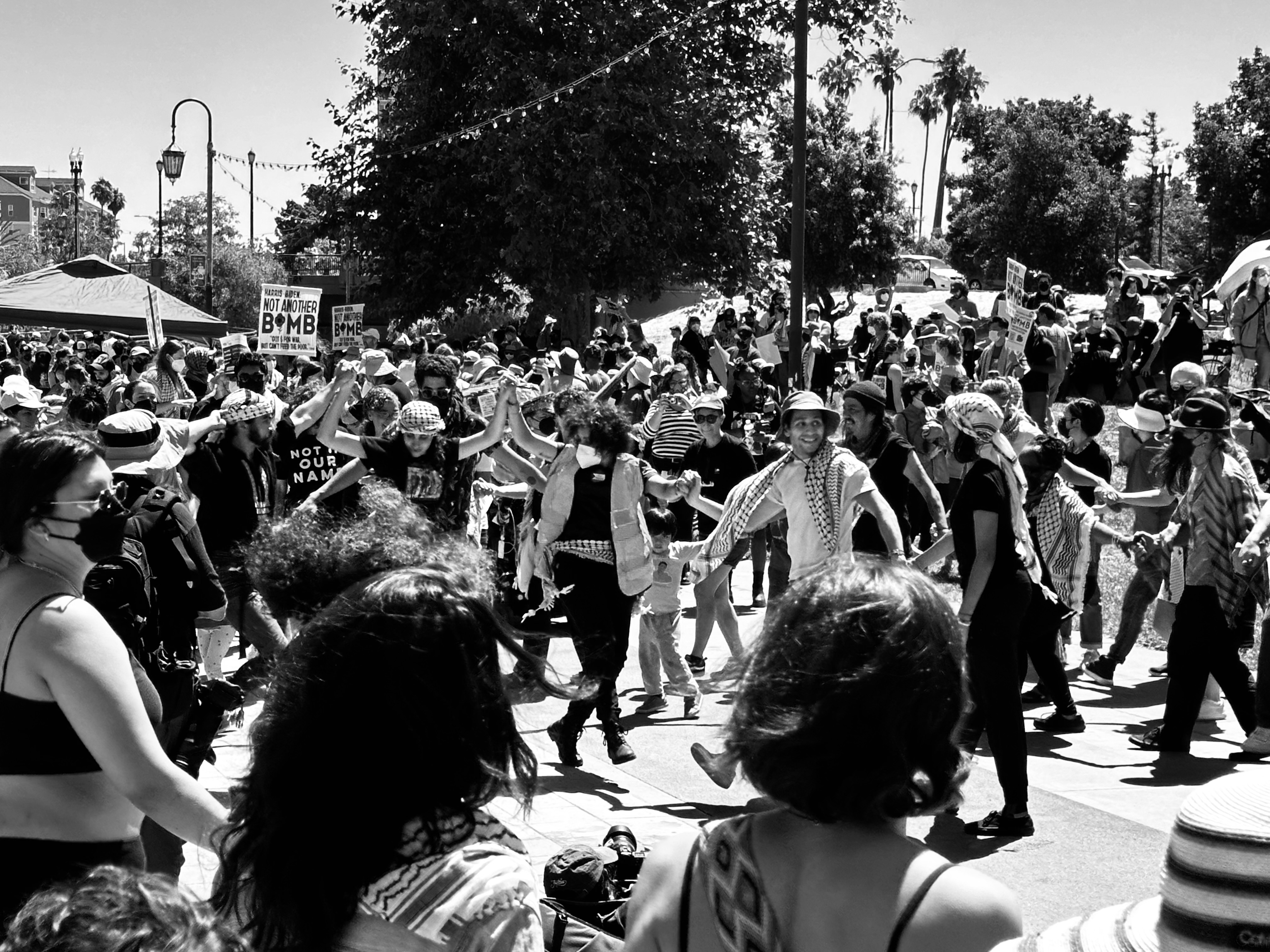
Dabke is a social folk dance that dates back to 3,000 BCE and originates in the Levant, which includes Palestine, Jordan, Lebanon, Iraq and Syria.
Oral history tells us that dabke originated when members of a village would gather together to repair their homes by stomping on the roofs, adding mud, twigs, and stones. Now, dabke is done at celebratory events, like weddings, and people of all abilities are encouraged to join.
Dabke is also a form of resistance that asserts our existence as Palestinians and people in diaspora fighting for our right to our homelands. During the British Mandate (1918-1948), Palestinians danced dabke as a statement of protest against Zionist colonial settlement.
Oppression of Palestinians includes the erasure of our cultural practice. During the First Intifada of 1987, the occupation aggressively cracked down on Palestinian cultural groups, including dabke troupes. During this time, many Palestinian artists, musicians, and dancers were imprisoned or killed.
Dabke connects Palestinians in diaspora to our indigenous culture and our resistance against occupation. Through dabke, we keep ancient cultural traditions alive. Dabke builds connections with other people in struggle against their occupiers and oppressors. It allows all Palestinians a collective practice of resistance, to keep with us until return.
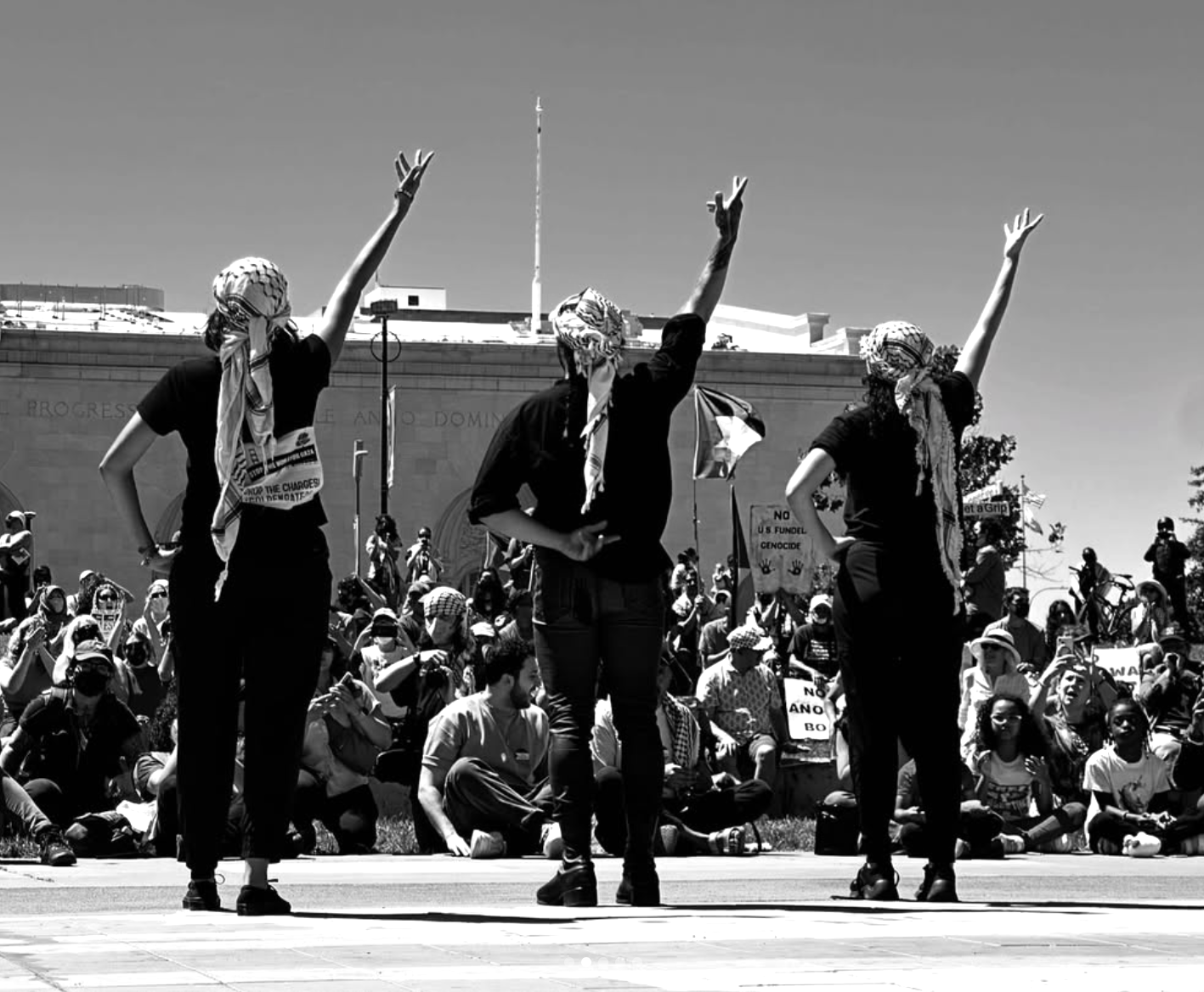
Image credits: Houssam Mchaimech (top of page), Isaac Kopecky (center, bottom of page)